
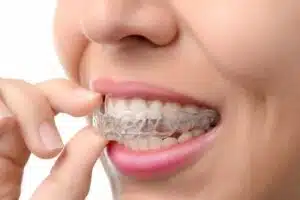
Many people exploring orthodontic treatment in St. George, UT ask the same question before scheduling a consultation: does Invisalign work like traditional braces? The question is understandable. Both options promise straighter teeth and healthier bites, yet they look and feel very different. This guide explains how Invisalign compares to braces, how it moves teeth, and what results patients can realistically expect.
Orthodontic treatment is a long-term commitment. Understanding how each option works helps you feel confident in your decision and prepared for the process ahead.
Does Invisalign Work the Same Way as Braces?
At their core, Invisalign and braces share the same goal. Both are designed to move teeth into healthier, more balanced positions over time. When people ask if Invisalign works the same way as braces, the answer is yes in purpose, but different in execution.
Traditional braces use brackets and wires that apply continuous force to the teeth. Adjustments are made periodically to guide movement. Invisalign uses a series of clear aligners that apply carefully planned pressure in stages. Each aligner represents a small step in the overall treatment plan.
The biology behind tooth movement is the same for both systems. Teeth shift as bone remodels around them. The difference lies in how that pressure is delivered and how the patient experiences treatment day to day.
How Invisalign Works to Move Teeth Over Time
Many patients ask, Does Invisalign Work? Here’s a simple explanation of how it functions before committing to treatment. Invisalign relies on a custom sequence of clear aligners created using advanced digital planning. Your orthodontist maps out each stage of movement before treatment begins.
Each aligner is worn for about one to two weeks. It applies gentle, targeted pressure to specific teeth. Once that stage is complete, you move to the next aligner. Over time, these small movements add up to meaningful alignment changes.
Consistency plays a major role in success. Aligners are designed to be worn most of the day. Skipping wear time can slow progress or affect results. Invisalign works best when patients follow the recommended schedule closely.
Invisalign vs Braces: Key Differences Patients Should Know
While Invisalign and braces aim for the same outcome, the experience feels different in several ways.
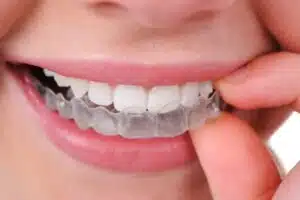
Visibility is often the most obvious difference. Invisalign aligners are clear and blend naturally with teeth. Braces are more noticeable, even with clear brackets.
Comfort also varies. Braces can cause irritation from wires and brackets. Invisalign aligners are smooth and custom fit, which many patients find gentler on the mouth.
Removability is another key distinction. Invisalign aligners can be removed for eating and brushing. Braces stay in place until treatment ends.
Food restrictions are minimal with Invisalign since aligners come out. Braces require avoiding sticky or hard foods that can damage hardware.
Oral hygiene is often easier with Invisalign. Brushing and flossing can continue normally without navigating around brackets or wires.
Do Invisalign Aligners Work for All Orthodontic Problems?
A common question patients ask is, Does Invisalign Work for every type of orthodontic issue? Invisalign is highly effective for many cases, including mild to moderate crowding, spacing, and certain bite problems. However, more complex cases may still benefit from traditional braces. Severe bite issues, significant rotations, or jaw alignment concerns sometimes require fixed appliances for optimal control.
The determining factor is not preference alone, but proper diagnosis and planning. An orthodontist evaluates tooth position, bite relationship, and overall treatment goals before recommending Invisalign or braces.
For many patients, Invisalign offers excellent results when used for the right indications and guided by professional expertise.
How Effective Is Invisalign Compared to Braces?
When asking how well Invisalign works compared to braces, outcomes depend on treatment planning, patient compliance, and case complexity. In appropriately selected cases, Invisalign can achieve results comparable to braces.
Predictability has improved significantly over the years. Digital planning allows orthodontists to visualize movements before treatment begins. Refinements can be added when needed to fine-tune results.
Timelines are often similar between Invisalign and braces. Some Invisalign cases finish sooner, while others take longer if aligner wear is inconsistent. Wearing aligners as directed plays a major role in efficiency.
Both options are effective tools. Success comes from matching the right tool to the right patient and following the plan carefully.
What Invisalign Treatment Feels Like Day to Day
Many patients wonder, Does Invisalign Work in daily life? Generally, life with Invisalign is straightforward. When starting a new aligner, patients often feel mild pressure. This sensation usually fades within a day or two and signals that the aligner is working.
Speech changes can occur briefly as the mouth adjusts. Most people adapt quickly and speak normally within a short time.
Aligners should be removed for meals, then cleaned before reinsertion. This routine becomes second nature for most patients after the first few weeks.
Compared to braces, there are fewer emergency visits. There are no wires to break or brackets to loosen, which many patients appreciate.
Expert Insight From Orthodontics Inc Doctors
The success of Invisalign depends heavily on orthodontist-guided planning. At Orthodontics Inc, treatment is approached with careful evaluation and long-term outcomes in mind.
Dr. Joseph Wilson, founder of Orthodontics Inc, has helped shape a team-focused approach that emphasizes precision and patient understanding. Invisalign planning is not an automated treatment. It requires experience and clinical judgment.
The Orthodontics Inc team, including Dr. Anandaraja Shankar, Dr. Howard Choi, and Dr. Ronald E. Unterseher, works collaboratively to ensure each Invisalign plan aligns with the patient’s needs. Thoughtful monitoring and adjustments help keep treatment on track.
Orthodontist involvement makes the difference between aligners that simply fit and aligners that truly perform as intended.

Final Thoughts: Choosing Between Invisalign and Braces
Deciding between Invisalign and braces is a personal choice guided by clinical needs and lifestyle preferences. Patients often ask again at this stage if Invisalign works as reliably as braces. For many people, the answer is yes when treatment is properly planned and followed.
Both options are proven methods for improving alignment and bite function. The most important factor is working with an orthodontist who understands when each approach is most effective.
Clear expectations, good communication, and consistent care lead to successful outcomes regardless of the appliance chosen.
Schedule an Invisalign Consultation at Orthodontics Inc in St. George, UT
If you are considering Invisalign and want to know, Does Invisalign Work, schedule your consultation with the team at Orthodontics Inc in St. George, UT. They take time to explain recommendations and answer questions without pressure.
Exploring Invisalign with professional insight allows you to make an informed decision based on your needs, goals, and long-term oral health.
