By Dr. Joseph Wilson, DMD, MSD
Phase 1 orthodontic treatment is early treatment for children who still have a mix of baby teeth and permanent teeth. Phase 2 orthodontic treatment usually happens later, when most or all permanent teeth have come in and the orthodontist can guide the full smile and bite into better alignment.
The difference matters because not every child needs two phases of treatment. Some children only need monitoring until they are ready for braces or Invisalign. Others benefit from early orthodontic treatment because certain jaw, bite, or spacing problems are easier to guide while the child is still growing.
At Orthodontics Inc., parents across the Southwest can get a clearer understanding of whether their child needs early intervention now, full treatment later, or simply regular growth checks until the timing is right.
What Is Phase 1 Orthodontic Treatment?
Phase 1 orthodontic treatment, also called early or interceptive orthodontic treatment, is used while a child is still growing. It usually happens when the child has both baby teeth and permanent teeth, often around ages 6 to 10.
The goal is not to create a finished adult smile. The goal is to correct or guide problems that may become harder to manage later.
Phase 1 treatment may help with concerns such as:
- narrow arches
- severe crowding
- crossbites
- underbites
- excessive overjet
- harmful oral habits
- blocked-out permanent teeth
- jaw growth concerns
This is why early treatment should be selective. It is not meant for every child with slightly crooked teeth. It is usually recommended when doing something early may create a healthier foundation for later development.
What Is Phase 2 Orthodontic Treatment?
Phase 2 orthodontic treatment is the comprehensive stage. It usually begins when most or all permanent teeth have erupted.
This is the phase many parents think of when they picture full braces or clear aligner treatment. The orthodontist is no longer only guiding growth or making space. They are now working toward the final alignment of the teeth and bite.
Phase 2 treatment may involve:
- metal braces
- clear braces
- Invisalign
- rubber bands
- retainers after treatment
- other appliances when needed
Why Do Some Children Need Two Phases?
Some children need two phases because their orthodontic problem has two separate parts.
The first part may involve growth, jaw width, bite function, or space for permanent teeth. That is where Phase 1 can help. The second part involves final tooth alignment once the permanent teeth are ready. That is where Phase 2 comes in.
A child may need two phases if waiting could allow the problem to become more complicated. For example, a crossbite may affect how the jaws grow. Severe crowding may leave permanent teeth blocked out. A narrow upper jaw may limit how the bite develops.
Early treatment does not always remove the need for braces later. What it can do is make later treatment more manageable, more predictable, or less complicated.
Does Every Child Need Phase 1 Treatment?
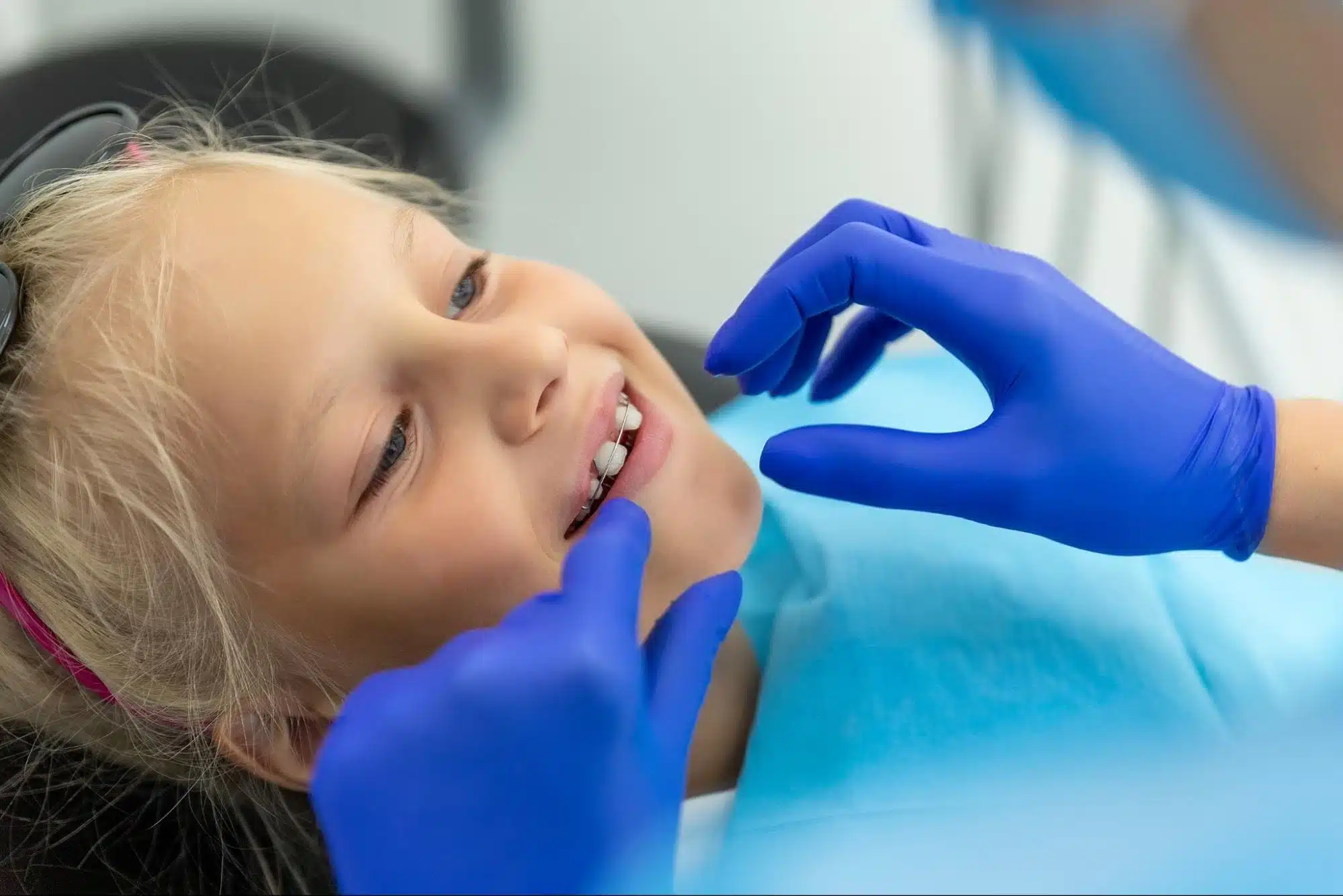
No. Most children do not automatically need Phase 1 treatment. An early orthodontic checkup does not always mean early treatment. Sometimes the best answer is observation. The orthodontist may simply monitor how the teeth and jaws are developing.
The American Association of Orthodontists recommends that children have their first orthodontic checkup by age 7. Around this age, children usually have a mix of baby and permanent teeth, which gives the orthodontist useful information about growth and tooth development.
That exam can help answer questions like:
- Are the permanent teeth coming in properly?
- Is the bite developing normally?
- Is there enough room for incoming teeth?
- Is the jaw growing in a balanced way?
- Is there a problem that should be treated early?
- Can we safely wait and monitor growth?
For many children, the answer is simply to keep watching. For others, early treatment may be recommended because timing is important.
Phase 1 vs Phase 2 Orthodontic Treatment: The Main Difference
The easiest way to understand the difference is by looking at the goal of each phase.
| Factor | Phase 1 Orthodontic Treatment | Phase 2 Orthodontic Treatment |
| Typical timing | While baby and permanent teeth are both present | After most permanent teeth have erupted |
| Main goal | Guide growth, bite, or space early | Align the full smile and bite |
| Common age range | Often around 6 to 10 | Often preteen or teen years |
| Treatment scope | Limited and problem-focused | More comprehensive |
| Appliances | Expanders, limited braces, space maintainers, habit appliances | Braces, clear braces, Invisalign, rubber bands |
| Final result | Creates a better foundation | Finishes alignment and bite correction |
What Problems Can Phase 1 Treatment Help With?
Phase 1 treatment is most useful when a child has a problem that should not wait until the teen years.
Crossbites
A crossbite happens when the upper and lower teeth do not fit together properly from side to side. If a child shifts the jaw to bite comfortably, that can affect growth and function over time.
Narrow upper jaw
A narrow upper jaw may limit space for permanent teeth or affect how the bite comes together. An expander may be recommended in some cases while growth can still be guided.
Severe crowding
Mild crowding can often wait. Severe crowding may need early attention if permanent teeth are blocked, trapped, or running out of room.
Underbite or jaw growth imbalance
Some jaw growth patterns are easier to influence when a child is still growing. Early evaluation helps determine whether treatment should begin now or be monitored.
Harmful oral habits
Thumb sucking, tongue thrusting, or prolonged pacifier habits may affect tooth position and jaw development. Phase 1 care may include habit guidance or appliances when needed.
Protruding front teeth
If upper front teeth stick out significantly, they may be more vulnerable to injury. Early treatment may sometimes reduce that risk and improve bite function.
What Happens Between Phase 1 and Phase 2?
There is usually a resting or observation period between Phase 1 and Phase 2.
This does not mean nothing is happening. It means the orthodontist is watching how the permanent teeth erupt and how the jaws continue to grow. The child may come in for periodic checkups, even if no active treatment is happening.
During this period, the orthodontist may monitor:
- permanent tooth eruption
- jaw growth
- bite development
- spacing changes
- whether retainers or appliances are being worn
- the right time to begin Phase 2 if needed
This stage helps prevent treatment from being rushed. Good orthodontic timing is not about starting everything as early as possible. It is about starting the right treatment at the right time.
Does Phase 1 Make Phase 2 Shorter?
Sometimes, but not always.
Phase 1 treatment may make Phase 2 simpler because it can address certain problems before they become more complicated. It may help create space, guide the bite, or improve jaw balance. That can sometimes reduce how much work needs to be done later.
But parents should not think of Phase 1 as a guaranteed way to avoid braces or shorten all future treatment. Some children still need full Phase 2 treatment once the permanent teeth come in.
What Happens During Phase 2 Treatment?
Phase 2 is where the orthodontist works toward the final result.
By this point, most permanent teeth are present, and the treatment plan can focus on the full smile and bite. The exact method depends on the patient.
Some children or teens may need traditional braces. Others may qualify for clear braces or Invisalign.
Phase 2 may focus on:
- straightening teeth
- correcting crowding or spacing
- improving bite alignment
- coordinating the upper and lower arches
- improving smile balance
- preparing for long-term retention
After Phase 2, retainers help protect the final result. This part matters because teeth can shift after treatment if they are not maintained.
How Parents Can Tell If Their Child May Need Early Treatment
There are signs that an early evaluation may be especially important. Your child may need an orthodontic checkup if you notice:
- early or late loss of baby teeth
- difficulty biting or chewing
- mouth breathing
- thumb sucking beyond early childhood
- jaws that shift or make sounds
- crowded front teeth
- teeth that do not meet properly
- upper teeth that stick out noticeably
- lower teeth that sit in front of upper teeth
- permanent teeth coming in behind baby teeth
Some of these signs may not require treatment. But they are worth checking because early information can make the next step clearer.
When Waiting Is the Better Choice
Early treatment can be helpful, but it should not be forced.
Sometimes a child has mild crowding, a developing bite issue that is not severe, or teeth that simply need more time to erupt. In those cases, the orthodontist may recommend observation rather than immediate treatment.
That can be reassuring for parents. A consultation is not a commitment to start treatment. It is a way to understand what is developing and whether anything needs attention.
Good orthodontic care is not about doing more treatment than necessary. It is about choosing the right level of care for the child’s actual needs.
The Parent’s Takeaway on Phase 1 vs Phase 2
Phase 1 and Phase 2 orthodontic treatment are not competing options. They are different stages used for different reasons.
Phase 1 is early, limited, and focused on guiding growth, bite development, or space while a child still has mixed teeth. Phase 2 is more comprehensive and focuses on finishing the alignment of the permanent teeth and bite.
At Orthodontics Inc., Dr. Joseph Wilson, DMD and the team help parents across the Southwest understand whether early treatment is truly needed, whether observation makes more sense, or whether a child is ready for full orthodontic care. If you want clear guidance on what stage your child may be in and what timing makes the most sense, schedule a consultation today and get answers from a team that plans treatment with long-term health and stability in mind.
Frequently Asked Questions
Will Phase 1 treatment prevent braces later?
Not always. Phase 1 may reduce the severity of later problems, but many children still need Phase 2 treatment once the permanent teeth come in.
How long is the break between Phase 1 and Phase 2?
It depends on the child. There may be a resting period while permanent teeth erupt and jaw growth continues. The orthodontist will monitor development during this time.
Is Phase 2 treatment the same as braces?
Phase 2 often includes braces, but it may also involve clear braces, Invisalign, rubber bands, or other appliances depending on the patient’s needs.
How do I know if my child needs two-phase orthodontic treatment?
The only way to know is through an orthodontic evaluation. The orthodontist can check tooth eruption, jaw growth, bite development, and spacing to determine whether early treatment is needed.