Medically reviewed by Dr. Ronald E. Unterseher, DDS, MS, Orthodontics Inc.
Crooked teeth are the sign every parent notices, and they’re the least reliable one. The real signs a child needs an orthodontist usually show up years before the front teeth look wrong: baby teeth that fall out early or refuse to fall out at all, a jaw that shifts sideways when your child bites down, chewing on one side, mouth breathing, or teeth that don’t meet in front. Most of these are easy to check at the kitchen table, and none of them require you to diagnose anything.
Key Takeaways
– The AAO recommends a first orthodontic check by age 7, while baby and adult teeth are both present.
– An evaluation is not a commitment to braces. Most young children are told to come back and be watched.
– Bite problems are easier and cheaper to guide while the jaws are still growing.
– Crowding, an underbite, a crossbite, and a jaw that shifts on closing are the findings worth acting on early.
– Habits like thumb sucking and persistent mouth breathing change how the jaw develops.
When should a child first see an orthodontist?
By age 7. The American Association of Orthodontists recommends an evaluation at that age because most children then have a mix of baby and permanent teeth, which is the first point at which an orthodontist can see how the bite is developing and how much room the adult teeth will have.
Age 7 is a checkpoint, not a start date. Plenty of 7 year olds walk out with nothing more than a recall appointment. What the visit buys you is timing: knowing whether a problem needs guiding now, while growth can be used, or simply watching until the adult teeth arrive.
What are the signs a child needs an orthodontist?
Look for these at home. Any one of them is a reason to book an evaluation, not a reason to worry.
- Baby teeth lost very early or very late. Both can leave adult teeth without a clear path in.
- Crowded, overlapping or rotated front teeth once the adult incisors come through.
- Teeth that don’t meet. If your child bites down and there’s still a gap between the upper and lower front teeth, that’s an open bite.
- Upper front teeth that sit behind the lower ones on closing. That’s an underbite, and it’s one of the strongest reasons to be seen early.
- A jaw that slides to one side as the teeth come together. That shift often points to a crossbite.
- Chewing on one side, or difficulty biting into food.
- Mouth breathing that persists, especially at rest and during sleep.
- Thumb sucking past roughly age 4, or a tongue that pushes forward against the teeth when swallowing.
- Speech that isn’t clearing up on the sounds made with the tongue behind the front teeth.
- Jaw sounds, clicking, or complaints of jaw soreness.
- Front teeth that stick out far enough to be at risk during sports or a fall.
Cleveland Clinic groups most of these under malocclusion, the general term for teeth and jaws that don’t fit together as they should.
Which of these actually need early treatment?
Not all of them. This is the distinction that saves families money and appointments.
|
Finding |
Watch and recheck |
Treat early, before growth finishes |
|---|---|---|
|
Mild crowding of the front teeth |
Usually watch until most adult teeth arrive |
Not typically |
|
Underbite (lower jaw ahead of upper) |
No |
Yes, growth guidance works best here |
|
Crossbite with a jaw shift on closing |
No |
Yes, an untreated shift can affect jaw growth |
|
Open bite with an active thumb or tongue habit |
Only if the habit is already stopping |
Yes, habit plus appliance |
|
Severely protruding upper front teeth |
No |
Yes, largely to reduce injury risk |
|
Spacing and gaps in a young child |
Usually watch, gaps are normal at this age |
Rarely |
|
Very early loss of a baby molar |
No |
Space maintainer, to hold the gap open |
When treatment does start young, it’s usually split into two stages. The AAO’s overview of two phase treatment explains the reasoning: phase one guides jaw growth and creates room while the child is still growing, then a rest period follows, then phase two aligns the full adult set. Our own page on phase 1 versus phase 2 treatment covers what each stage involves.
Why does starting earlier help?
A child’s jaws are still growing, and growth is the one tool that stops being available later. Guiding a narrow upper jaw wider at 8 is a straightforward appliance. The same correction after growth ends can mean a longer treatment or, in the most severe cases, surgery.
Early care also removes causes rather than just appearances. A crossbite that makes a child chew on one side, or a habit that’s pushing the front teeth forward, keeps doing damage every day it continues. Cleveland Clinic notes in the same overview that untreated bite problems can contribute to uneven wear, chewing difficulty and cleaning problems that lead to decay.
The American Dental Association is direct about habits specifically: thumb sucking that continues once the permanent teeth start coming in can affect how the teeth and the roof of the mouth develop.
What happens at a first orthodontic evaluation?
- Conversation, 5 to 10 minutes. We ask what you’ve noticed, plus history on habits, breathing, injuries and any family pattern of bite problems.
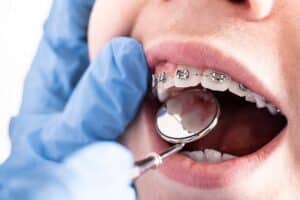
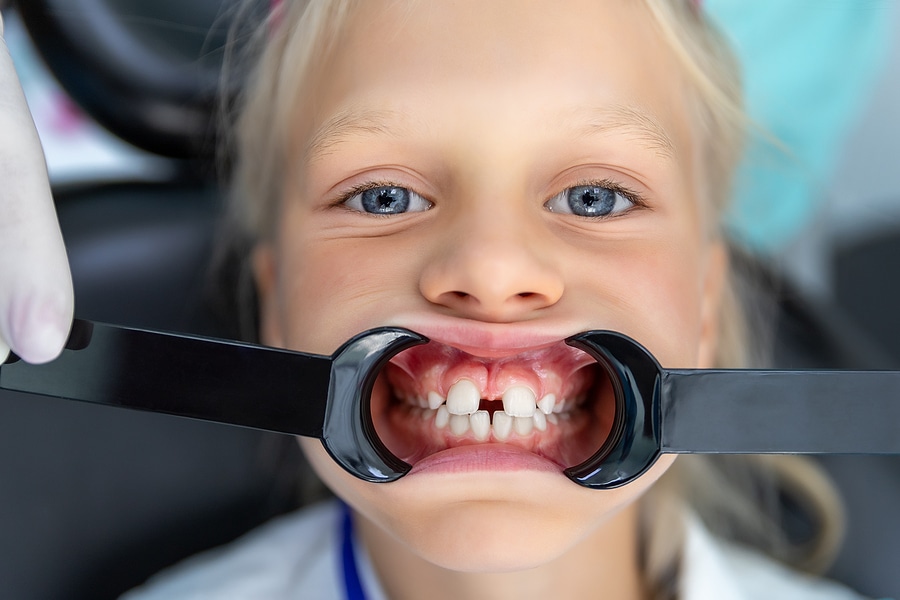
- Clinical exam, 10 to 15 minutes. We look at the teeth present, the teeth still to come, how the jaws close, and whether there’s a shift on closing.
- Records if they’re needed. Digital images and a panoramic radiograph show the unerupted teeth and the jaw relationship. Not every young child needs these at a first visit.
- Findings, in plain language. You’ll hear what we see, what it means, and whether it’s growing into a problem or out of one.
- A recommendation. Usually one of three: nothing needed, recheck in 6 to 12 months, or start a specific phase one treatment now with a stated reason.
- Written costs if treatment is recommended. Numbers before you decide, never after.
At Orthodontics Inc. that first consult is free. Booking one costs you an hour, not a treatment plan. Call (435) 688-7711 to schedule it.
Orthodontist or dentist: who should you ask?
Your general dentist sees your child twice a year and is often the first to flag a bite concern. An orthodontist has completed additional years of specialty training after dental school, focused entirely on tooth movement and jaw development. The AAO explains the difference between an orthodontist and a dentist in more detail.
You don’t need a referral to be seen. If your dentist mentions crowding or a bite issue, or if you’ve spotted something on the list above, you can book directly with our pediatric orthodontist team.
Frequently asked questions
At what age should my child see an orthodontist for the first time?
By age 7, according to the American Association of Orthodontists. At that age most children have a mix of baby and adult teeth, which lets an orthodontist see how the bite and jaws are developing. Earlier is appropriate if you notice an underbite, a jaw that shifts when biting, or a habit that’s visibly moving teeth.
Does an early evaluation mean my child will get braces right away?
No. The most common outcome of a first visit is a recall appointment 6 to 12 months later. Early treatment is recommended when something specific benefits from growth, such as a crossbite, an underbite or a strong habit, and it’s the minority of cases.
What are the earliest signs a child needs an orthodontist?
Baby teeth lost unusually early or late, crowded adult front teeth, an underbite, a jaw that slides sideways on closing, chewing on one side, and thumb sucking past about age 4. Difficulty biting into food and persistent mouth breathing belong on the list too.
Is mouth breathing an orthodontic problem?
It can be connected to one. Long term mouth breathing is often linked with a narrow upper jaw and a low tongue posture, both of which affect how the bite develops. It also has medical causes such as enlarged tonsils or allergies, so we look at the bite and refer for the airway side when that’s what’s driving it.
Can crowded baby teeth be a warning sign?
Yes. Gaps between baby teeth are normal and often a good sign, because adult teeth are wider. Baby teeth that are already tight against each other suggest the adult teeth will not have enough room, which is worth watching.
Will my child grow out of an underbite?
Usually not. An underbite tends to become more pronounced as the lower jaw grows, which is why it’s one of the findings orthodontists most want to see early. Growth guidance while the jaw is still developing is far simpler than the alternatives afterward.
Does thumb sucking really affect the teeth?
It depends on how long and how forcefully. The ADA notes that sucking habits continuing once permanent teeth arrive can change how the teeth and the roof of the mouth develop. Most children stop on their own, and gentle habit support works better than pressure.
How long does children’s orthodontic treatment take?
It varies with the problem being corrected. A phase one appliance often runs 9 to 12 months, followed by a rest period while the rest of the adult teeth come in, then a second phase. Single phase treatment in a teenager commonly runs 18 to 30 months. We give you a specific estimate for your child at the consult.
Are braces the only option for kids?
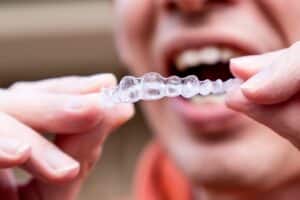
No. Depending on the finding, treatment may involve an expander, a space maintainer, a habit appliance, partial braces on a few teeth, or clear aligners for an older child. Full braces are one tool among several.
Should I wait until all the adult teeth are in?
For most mild crowding, yes. For jaw related problems, waiting removes the option that works best. That’s the entire reason the age 7 checkpoint exists: someone looks once, and tells you which category your child is in.
What if we’ve already passed age 7?
Then book now. There’s no cutoff, and the teenage years are the most common time to start. Adults are treated routinely too.
Does dental insurance cover a child’s orthodontic evaluation?
Coverage varies widely by plan, and many plans carry a separate lifetime orthodontic benefit rather than an annual one. Our consult is free regardless, and we check your benefits and give you written numbers before you decide anything.
Book the check that answers the question
If something on that list sounds like your child, one appointment settles it. You’ll leave knowing whether to act now, watch, or stop thinking about it. Our doctors, including Dr. Ronald E. Unterseher, DDS, MS, see children across Arizona, Utah, New Mexico and Colorado.
Call our St. George office at (435) 688-7711, find the office nearest you on our contact page, or book a free consult online.